Login
Call Us




CGI and VFX are evolving fast, with real-time rendering, AI-assisted workflows, virtual production and stylized visuals changing how modern studios create cinematic content.
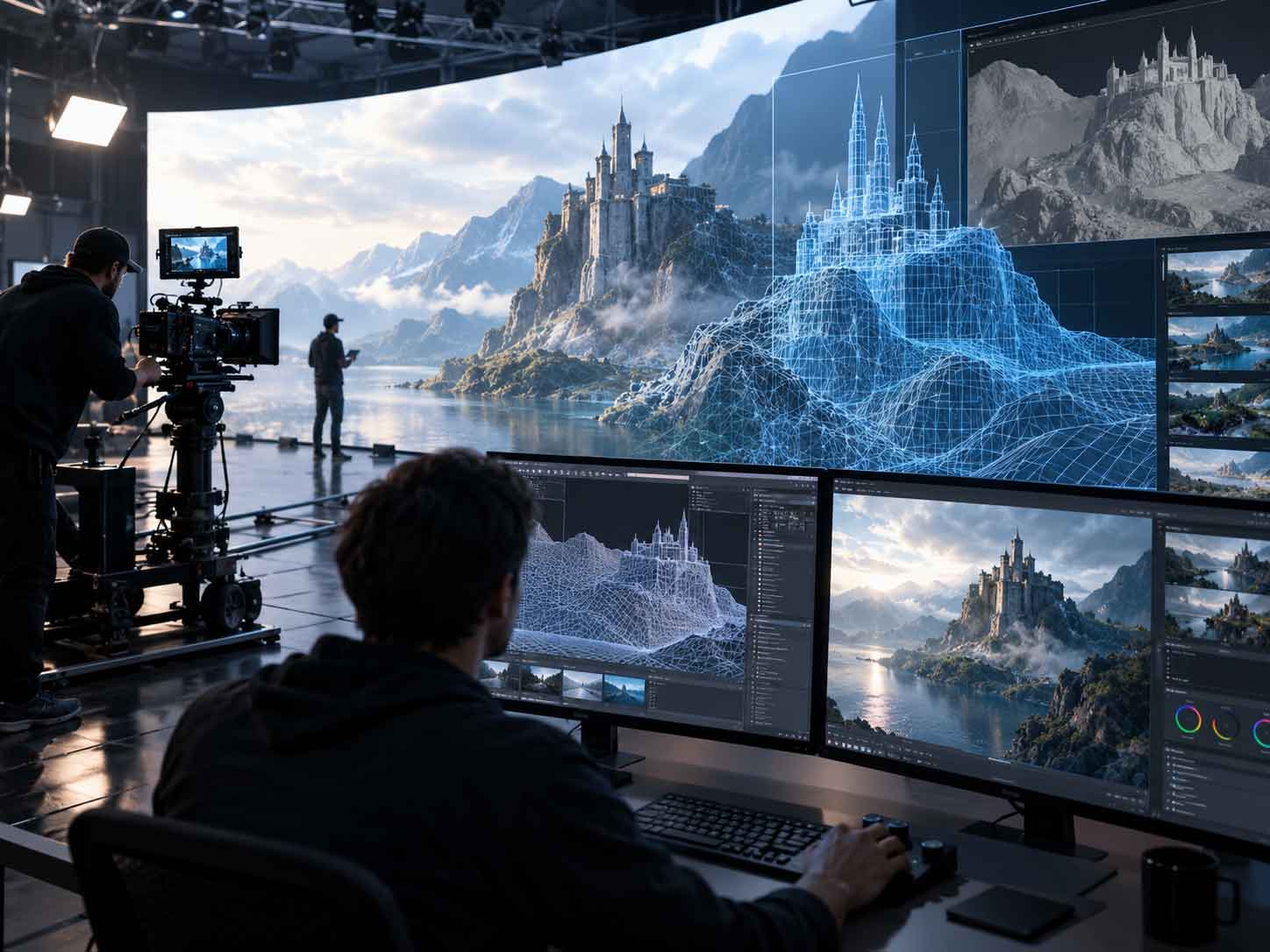
CGI and VFX are no longer just the final layer added after filming. Today, some of the most important creative decisions happen much earlier, while scenes are still being planned, tested or even shot. Virtual production, LED volumes and real-time engines are changing the rhythm of the whole industry.
Instead of waiting weeks to see how a digital environment, creature or lighting setup might look, directors and artists can now preview many elements almost instantly. This makes the process faster, but more importantly, it makes it more creative. Teams can test ideas, adjust the mood, change camera angles and solve visual problems before they become expensive.
Real-time rendering has moved far beyond video games. It is now a serious production tool for commercials, brand films, product visuals, music videos and cinematic sequences. Game-engine technology gives studios the ability to build realistic environments, experiment with lighting and show clients strong previews much earlier in the process.
Traditional rendering is not disappearing. High-end simulations, complex creatures, detailed destruction and photorealistic close-ups still require deep technical work. But the gap between real-time previews and final-quality visuals is getting smaller every year.
AI is also becoming part of the CGI and VFX pipeline. It can help with rotoscoping, cleanup, concept exploration, texture generation, background development and other repetitive tasks. Used well, AI does not replace artists. It removes some of the slow technical work so artists can spend more time on composition, emotion, rhythm and style.
The strongest studios will not be the ones that simply use AI everywhere. They will be the ones that understand where automation helps and where human taste still matters most.
For years, the biggest goal in CGI was realism. Now audiences are responding more and more to strong visual identity. Stylized CGI, bold colors, unusual materials, expressive motion and designed worlds can be more memorable than another perfectly realistic city skyline.
This is especially important for brands and studios that want to stand out. Technical quality still matters, but visual personality is becoming just as important. The next wave of CGI and VFX will be faster, more flexible and more artistic. The tools are changing, but the real goal remains the same: to create images that people remember.