Login
Call Us



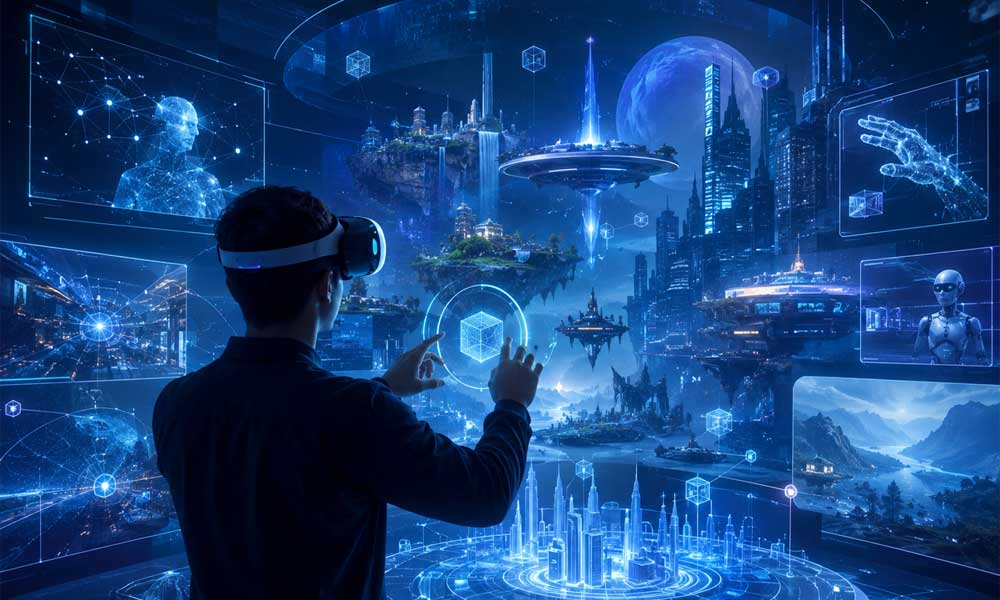
XR and virtual worlds are moving beyond novelty, becoming practical tools for training, collaboration, product design and richer digital experiences.
XR and virtual worlds are entering a more practical phase. For years, immersive technology was often presented as something futuristic, expensive, limited to gaming or experimental brand activations. Today, the conversation is changing. Businesses are looking at XR as a way to train teams, present products, collaborate remotely and create digital spaces that feel useful rather than decorative.
The strongest trend is not simply better headsets. It is the combination of spatial computing, real-time 3D content, AI and digital twins. Together, these technologies allow virtual environments to react to users, represent real places and support decisions naturally.
Spatial computing is making XR more intuitive. Instead of watching content on a flat screen, users can interact with information as if it exists in the room around them. Hands, voice, eye movement and body position can become part of the interface.
This matters because adoption depends on comfort. People do not want technology that feels like a puzzle. They want tools that help them understand, build, learn or choose faster. The best XR experiences will feel less like a gadget demo and more like a natural extension of work.
Virtual worlds are also becoming more focused. The old idea of entering a generic online universe is giving way to specific environments built for clear goals: a training room, a showroom, a factory simulation, a medical classroom or a design review space.
This approach gives virtual worlds real value. A team can test a product before it is manufactured, walk through a building before construction or train for dangerous situations without real-world risk.
AI is likely to make XR and virtual worlds more adaptive. It can help generate 3D assets, personalize experiences, analyze user behavior and support real-time guidance inside immersive environments.
The future of XR will not be about escaping reality. It will be about adding a useful digital layer to it. The winners will be the experiences that are clear, fast, comfortable and genuinely helpful.