
Login
Call Us



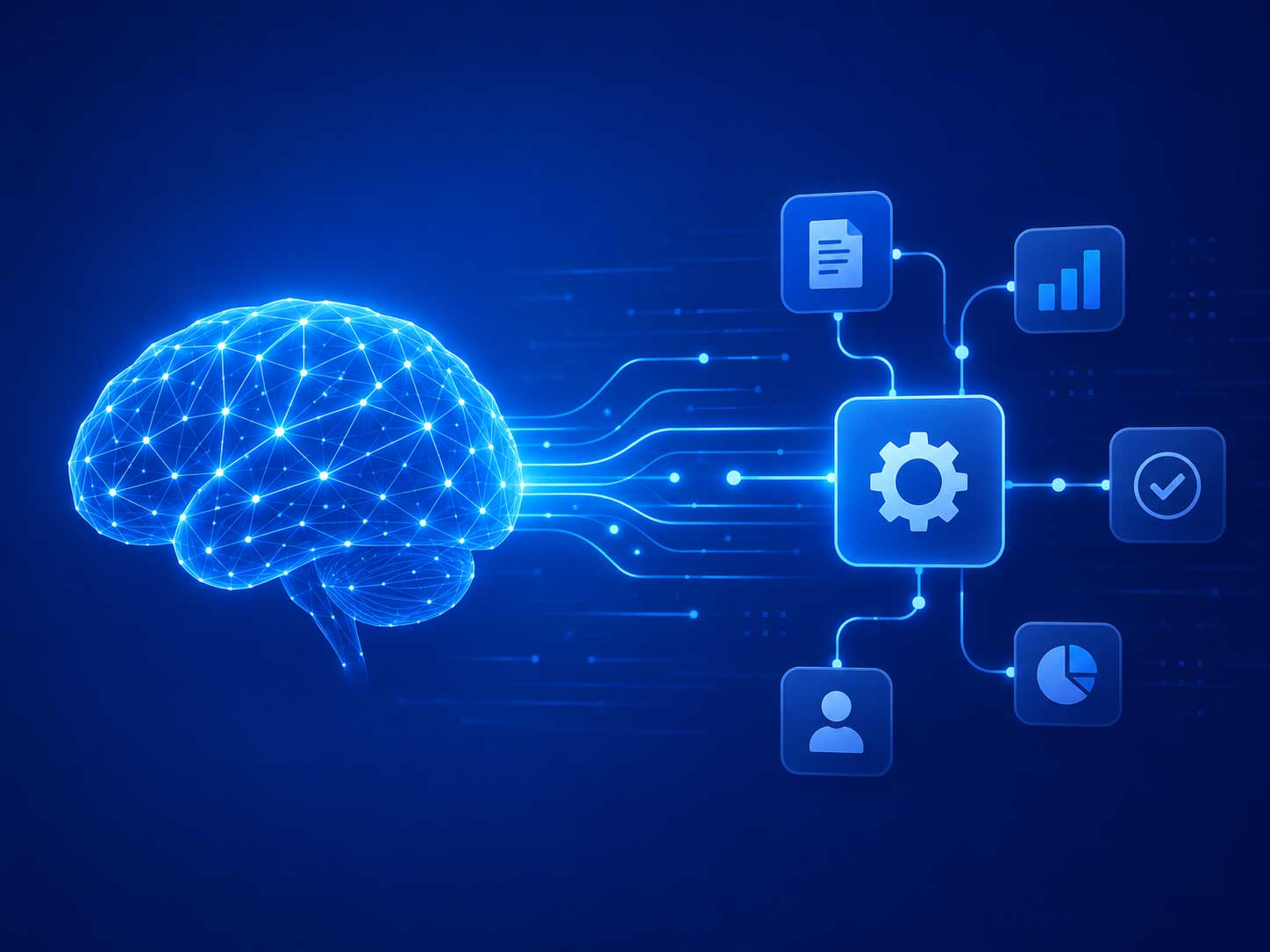
AI and automation are moving beyond simple task support, helping companies connect workflows, improve decisions and redesign how teams work across departments.
AI and automation are no longer separate conversations. Traditional automation was built around fixed rules: move a file, send a notification, update a record or repeat a predictable task. That still matters, but the new wave is different. Generative AI and AI agents can interpret information, summarize context, recommend next steps and interact with multiple systems inside a workflow.
Recent industry research shows that companies are moving from isolated pilots toward broader adoption of agentic automation. McKinsey reports that organizations are exploring AI agents for areas such as IT, knowledge management, customer service and content workflows. Gartner also expects task-specific AI agents to become a common feature inside enterprise applications, which means automation will increasingly live inside the tools people already use every day.
The biggest shift is the rise of AI agents. Unlike a basic chatbot, an agent can follow a goal, use tools, check information and complete several steps with less manual supervision. In practice, that could mean preparing a customer support answer, checking a database, drafting a follow-up email and updating a ticket.
This does not make human workers irrelevant. It changes where their attention is needed. People spend less time copying information between systems and more time reviewing decisions, handling exceptions and improving the process itself. The best results come when agents have clear limits, reliable data and a human handoff when judgment is required.
Automation fails quickly when the data behind it is messy. Duplicate records, outdated customer details, unclear ownership and disconnected systems create weak results, even with advanced AI. A workflow can only be as reliable as the information it uses.
That is why data governance is becoming part of automation strategy. Companies need to know where information comes from, who can change it and how sensitive data is protected. Without that foundation, AI tools can move faster, but not necessarily in the right direction.
As automation becomes more powerful, governance becomes more important. AI systems can produce incorrect outputs, expose private information or make recommendations that are difficult to explain. Teams need approval rules, audit trails, access controls and performance monitoring.
Security also matters because automated workflows often connect many business systems. If one account or integration is compromised, attackers may gain access to several processes at once. Strong identity controls and least-privilege access reduce that risk.
The next stage of AI and automation will not be about replacing every worker with software. It will be about building faster, clearer and more repeatable ways of working. Companies that succeed will redesign workflows around people and AI together, not simply add another tool on top of an old process.
The strongest automation is not the flashiest. It is the one that removes friction, improves accuracy and gives teams more time for decisions that actually need human experience.