Login
Call Us



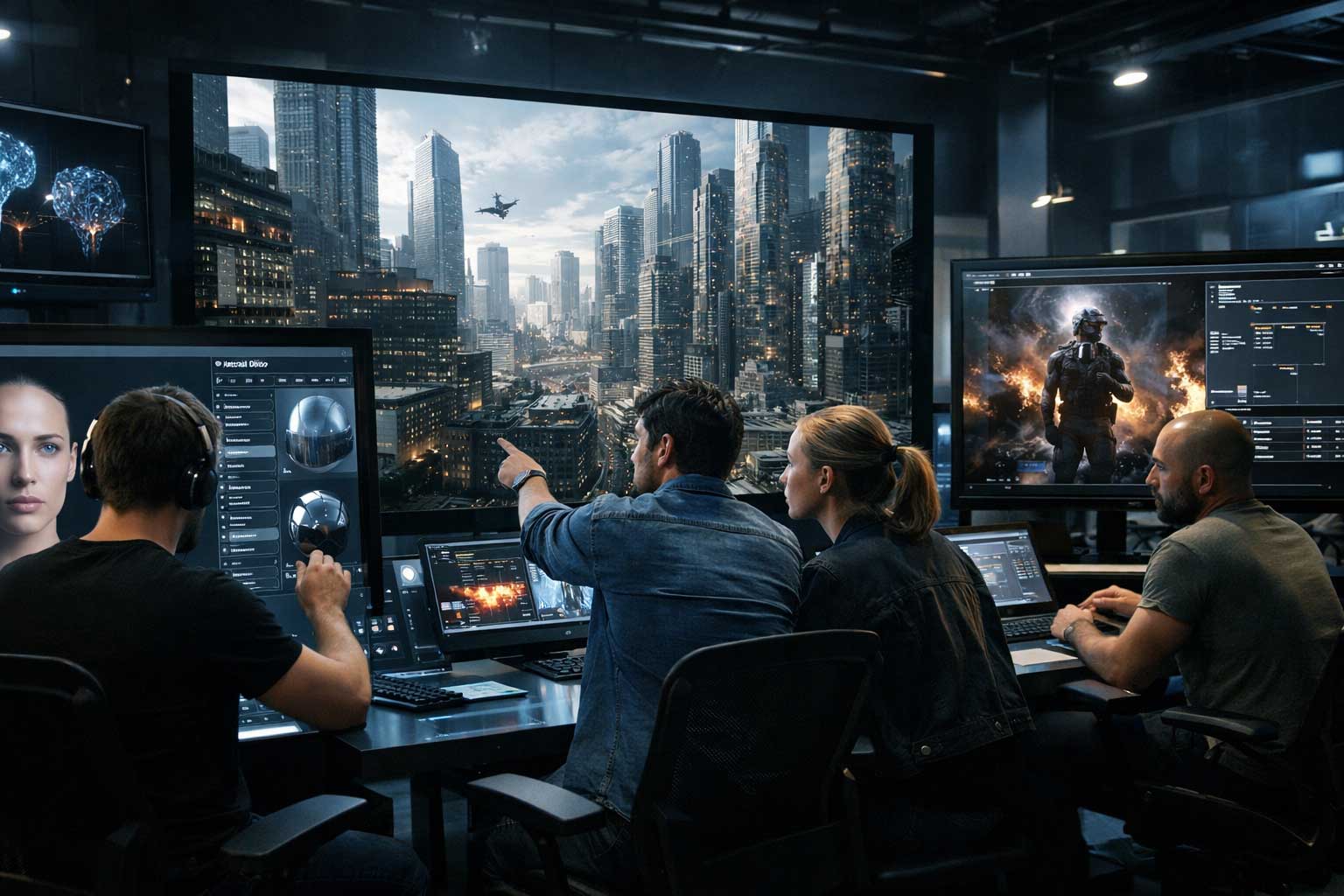
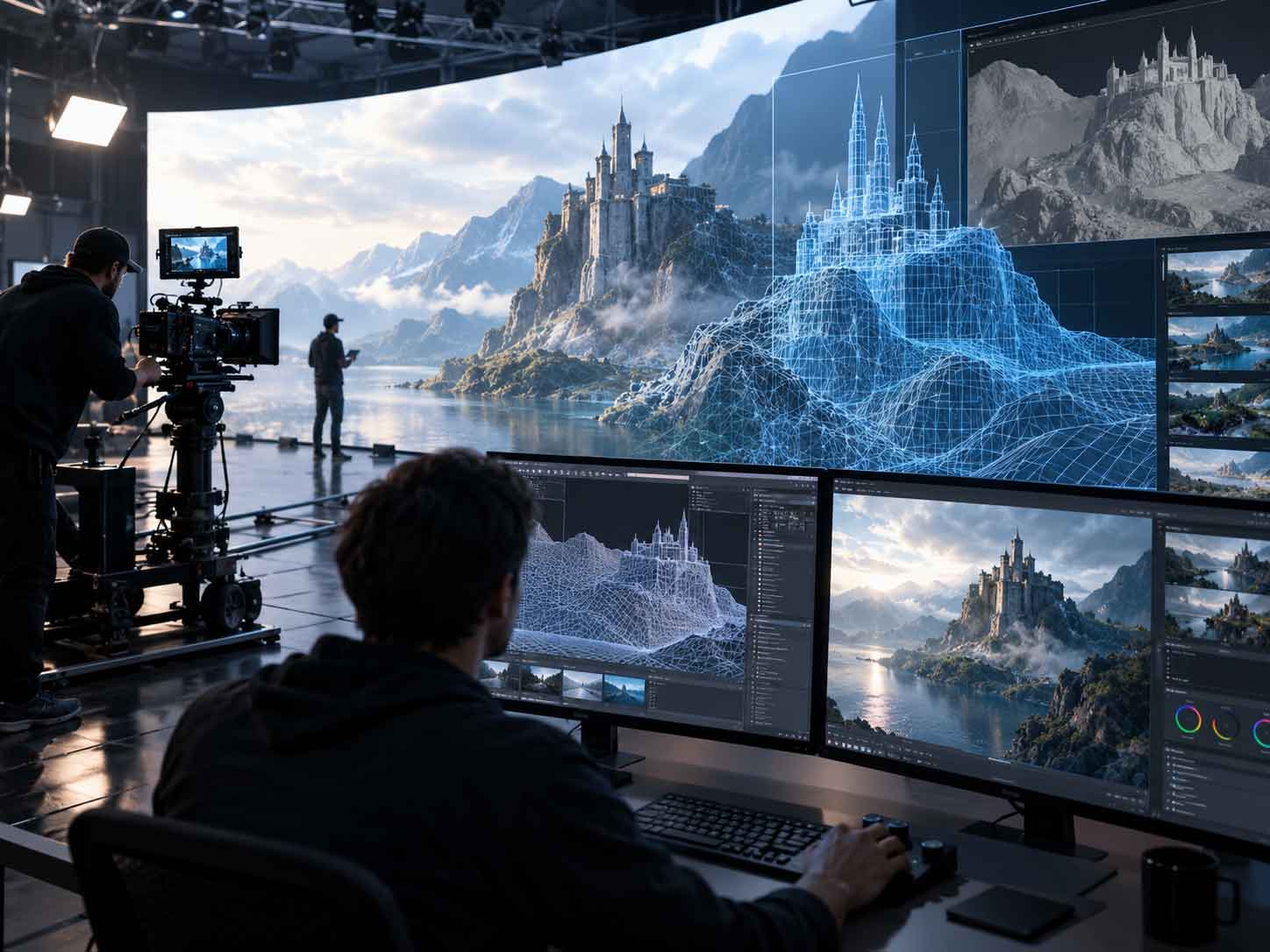
Artificial intelligence is rapidly reshaping the world of CGI, and neural rendering is becoming one of the most important technologies behind that shift. By combining AI with advanced graphics pipelines, studios can produce richer visuals, reduce rendering time, and work more efficiently across film, gaming, and immersive media. Recent industry developments show that AI-assisted rendering is no longer experimental — it is steadily becoming part of mainstream production.
Artificial intelligence is opening a new chapter in computer-generated imagery, and neural rendering is at the center of that transformation. What once required enormous rendering power, long production cycles, and highly specialized workflows can now be approached with far greater speed and flexibility. As creative studios push for higher realism and faster delivery, AI-enhanced graphics are helping bridge the gap between visual ambition and practical production.
This shift is not just about automation. It is about building smarter pipelines that allow teams to create more detailed lighting, more believable materials, and more immersive digital environments without depending entirely on traditional rendering methods. Across CGI, VFX, gaming, and XR, neural rendering is quickly becoming a serious production advantage.
For years, rendering has been one of the biggest pressure points in digital content creation. Teams often had to balance image quality against time, cost, and hardware limitations. High-end results were possible, but they came at a price: long render queues, complex optimization, and less room for creative experimentation.
Neural rendering changes that equation. Instead of relying only on conventional graphics calculations, AI models help predict and reconstruct visual information in more efficient ways. That can mean cleaner detail, better lighting behavior, smoother image reconstruction, and improved performance across demanding scenes. In practical terms, it allows artists and developers to move faster while maintaining a higher visual standard.
For studios, this has obvious value. Faster turnaround means more iteration, fewer technical slowdowns, and greater flexibility during production. Whether the work involves cinematic sequences, interactive experiences, or immersive simulations, teams can refine ideas more quickly and deliver stronger results under tighter deadlines.
What makes this moment important is that AI-assisted rendering is no longer being treated as a futuristic side experiment. It is increasingly being integrated into real production workflows and discussed as part of the next evolution of computer graphics. The broader direction of the industry is clear: smarter tools, faster delivery, and visuals that feel more lifelike without multiplying production costs.
Major industry showcases and research-driven events continue to highlight technologies that bring real-time graphics closer to cinematic quality. That matters not only for entertainment, but also for virtual production, enterprise visualization, training simulations, and extended reality applications where both realism and speed are essential. Studios are no longer asking whether AI will influence CGI. They are already figuring out how far it can take them.
The real strength of neural rendering is not that it replaces artists. It is that it gives them better tools. By reducing technical bottlenecks and accelerating visual workflows, AI allows creative teams to spend less time fighting limitations and more time refining the final result. That balance between efficiency and quality is exactly what modern production demands.
As the technology matures, neural rendering is likely to become a standard part of advanced graphics pipelines rather than a premium add-on. For companies working in CGI, VFX, AI visuals, and immersive media, the message is simple: the future of production will belong to teams that can combine creativity with intelligent tools. And that future has already started.